
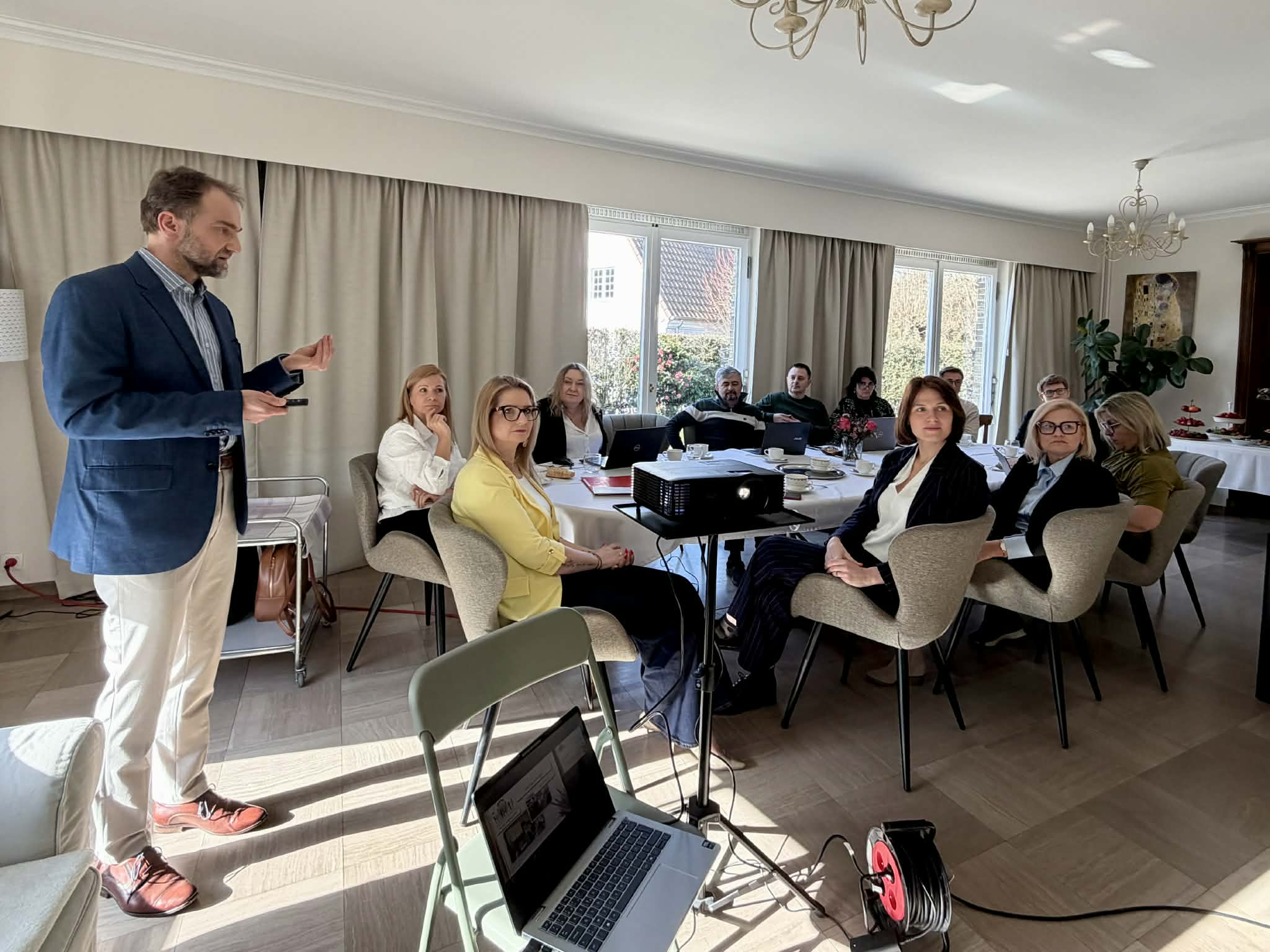
On 5-6 March 2026, the first face-to-face cross-border meeting of all partners involved in the MindPlay project took place in Ghent.
The main objectives of the meeting were to comprehensively assess the results achieved so far, to summarise the conclusions, to deepen the knowledge of the project’s mission, to plan in detail the next phase of implementation and to integrate the project team.
The partnership reviewed the substantive material underpinning the project, the state of play of the studies and analyses carried out in each country. The meeting on the first day focused on the discussion and review of all work packages, focusing in particular on the timetable for the mapping (work package 2) and the development of the portal (work package 5): monitoring, quality assurance, definition of tasks, responsible persons and deadlines for the coming months.
An important topic was quality control: peer review processes, internal validation cycles, milestones, qualitative and quantitative indicators, Leaders’ monitoring of work packages, and practical frameworks for cooperation.
During the meeting, the consortium participants agreed on key actions for the coming period: completion of the mapping of competency needs in each country, preparation of national research reports, preparation of the final version of the MindPlay portal.
During the second day, participants heard a lecture on contemporary risks in children, what they could see and participated in a workshop led by psychologists, from Logo Parole, in order to better understand the mission of the project that might be faced by students aged 5-9, what might be the symptoms seemingly invisible that the child is internally confronted with some bad experience for him/her. The emotions of a child can sometimes be very difficult to grasp. The importance of collaborating with the whole school environment, involving parents was stressed.
The cross-border project meeting confirmed the joint mission of the project partners to improve the safety and mental well-being of the youngest pupils. All participants agreed that the project was very important for their institutions, that it could be a major contribution to changing the approach to identifying early risks among the youngest pupils and preventing them.
03.06. 2026.